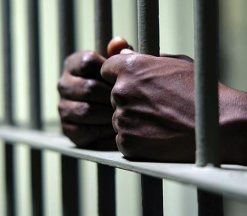
“Fasting for Freedom: Breaking the Chains of Injustice”
Why a “Compact” for Freedom?
Our correctional system is broken. Crime rates in the US are at historic lows, yet according to the International Centre for Prison Studies, we incarcerate a higher percentage of our citizens than any other nation—with the possible exception of North Korea. In 2012 (the most recent available data from the Bureau of Justice Statistics), there were 6.9 million American adults (2.9 % of the population) under the supervision of the correctional system with over 2 million in prisons. (By comparison, only 500,000 people were incarcerated in 1980). In addition, over 61,000 juveniles are under correctional supervision, and thousands of undocumented immigrants are held in detention centers due to immigration violations.
The exponential rise in the number of incarcerated adults is the direct result of the “War on Drugs” begun under President Ronald Reagan and continued into our current administration. Though drug use is evenly divided between whites and people of color, the “War On Drugs” has most dramatically impacted poor communities and communities of color as it targeted certain drugs such as crack cocaine more aggressively than other types of drugs. Coupled with mandated minimum sentences for drug convictions and harsh “three strike” laws, the number of incarcerated adults has quadrupled. Currently, more than half of the people in federal prisons were convicted of non-violent drug related crimes.
Sixty percent of the adults who are serving prison time are poorly educated people of color—African Americans (39%) and Latinos (21%). According to research done by The Sentencing Project, a full 34% of African American males and 17% of Latino males will be imprisoned at some point in their lives. In comparison, only 6% of white males will experience incarceration.
Because politicians have learned that being perceived as “soft on crime” limits their electability, they have been hesitant to advocate for changes in sentencing laws, early release programs and an end to the War on Drugs. Even recent attempts by the Justice Department to curtail mandatory sentences have been met with stiff opposition. Though crime rates have dropped, the public continues to believe that crime is increasing and demands that their communities do more to ensure “law and order”. This is due in large part to the sensationalism of crime that drives our news and entertainment media.
The current trend of “privatizing” our prisons has only made the issue of mass incarceration more intractable. Private prison companies usually require a “bed quota” in their contracts with state governments. In many small rural communities desperate for jobs and where an increasing number of these prisons are located, the corrections system is the primary employer—fueling a subconscious desire to keep prisons filled to capacity.
Incarceration impacts people and communities long after a person is released from prison. Those with federal felony convictions are barred from many employment opportunities, lose their right to vote, are prohibited from applying for education loans or SNAP benefits, and are banned from public housing. Though access to jobs following incarceration is key to preventing recidivism, almost all employment applications include “the box”. Applicants must answer the question, “Have you ever been convicted of a crime?” Checking the box often guarantees denial of employment. Once a felon, always a felon. There is no forgiveness. There is no restoration.
We do not believe that a justice system that is designed to incarcerate people at unprecedented rates and perpetually punish people (for any reason) mirrors God’s kingdom values of grace and mercy, forgiveness, reconciliation and restoration.
God is concerned about those who are imprisoned. While God is not “soft on crime”—the Old Testament Law is filled with categories of “criminal behavior” and prescribed sentences—God again and again exhibits mercy and grace toward the lawbreaker. Through Jesus Christ, God creates ample space for forgiveness and restoration. A person may be penalized due to behavior that is damaging to the community, but there are actions one can take to make restitution and be received back into full participation in the community. Jesus takes on the Messianic mission (Luke 4:18-19), which includes “proclaiming freedom for the prisoner” and announced blessing for those who cared for ‘the least of these’ while they were in prison (Matthew 25:36). We believe that caring for the prisoner includes assisting with their successful re-entry into the life of the community and re
moving the barriers to full participation in the life of the community. We are called to proclaim freedom for the prisoner and prophetically call our leaders to acting fairly in setting policies around our correctional system from the courts to the prisons to treatment of people upon release.
STARTING WEDNESDAY, MARCH 5th, 2014, AND CONTINUING THROUGH GOOD FRIDAY, APRIL 18, 2014, we will FAST to BREAK THE CHAINS OF INJUSTICE
We ask all participants to take the following action:
WEAR A BLACK ARMBAND EACH DAY DURING LENT TO SHOW OUR SOLIDARITY WITH THOSE WHO ARE OR HAVE BEEN INCARCERATED.
(Participants at Kimball Avenue Church will also have the option of wearing a ‘Compact’ button)
Why Wear An Armband or Button? Black armbands have historically been used to express grief, protest and solidarity. We encourage you to wear one throughout lent (or on Ash Wednesday and each day during Holy Week) to show your grief that our correctional system is broken, to protest the policies that keep people bound in chains of injustice long after they are released from prison and to show solidarity with those who are or have been incarcerated. The Compact Button reads, “I was in prison, and you…” as a way to remind yourself of Jesus’ call to minister to those who are in prison as if he were in prison while also making a public statement about your commitment to breaking the chains.
Additional Ways to Participate in our Fast For Freedom To make this Compact even more meaningful, we encourage you to take these additional action steps to break the yoke of oppression:
“Do Time” in the Word
- Each day, a Scripture related to crime, punishment, grace and/or restoration along with a question or two to help you reflect on the passage will be posted on this site. We encourage you to make comments and interact with others about the daily Scripture.
Get Educated
- Read a book. Some of us have already read, The New Jim Crow by Michelle Alexander. If you haven’t read it, do so during Lent. (Several copies will be available at the church.) Consider reading Dr. Becky Pettit’s book, Invisible Men: Mass Incarceration and the Myth of Black Progress. A list of additional books, online blogs and resources will be made available throughout Lent.
- Participants from Kimball Avenue Church are also encouraged to attend an informational meeting on Mass Incarceration on Saturday, March 22, at 2 pm at the Logan Square Library with others from the community. Leslie Willis and others will be presenting information about the impacts of imprisonment.
Watch Movies
- Through Lent, we encourage you to watch movies related to our broken justice system. See below for suggestions.
- Participants from Kimball Avenue Church will have the opportunity to see “Kids For Cash” a movie about the bribes in exchange for juvenile offenders scandal in Pennsylvania on March 8. We will also screen “Corrections”, a look at the return of the private prison, on March 29, and “The House I Live In” which documents the impact of incarceration on individuals, families and communities in early April.
Act with FORCE
- The FORCE project in Chicago has been instrumental in helping to pass legislation that allows individuals with non-violent convictions to seal their records which will enable them to access jobs more easily. However, there is lots of work to be done. Employment applications still include “the box” and people with records are routinely denied employment. FORCE is currently boycotting Walgreens for it’s discriminatory hiring practices. We encourage you to join the boycott of Walgreens during Lent.
- On Sunday, March 23, Marlon Chamberlain, a FORCE project representative, will be the guest at Kimball Avenue Church. He will help us to understand how we can take action to support efforts to expand the sealing bill and make our boycott of Walgreens more impactful.
Support Prisoners and the Wrongly Convicted
- If you live outside of Illinois, you can contact your county sheriff’s office to see if there are opportunities to visit prisoners. Most county jails have a chaplain’s office. In addition, we encourage you to fast at least once a week to show solidarity with the hundreds of prisoners across the country who have engaged in hunger strikes to protest conditions.
- If you live in Illinois, we encourage you to take the following additional actions to support prisoners.
- There are no “prisons” in Chicago. However, there are locations such as Cook County Jail were people are kept under guard as they await hearings or trials. Another location is the Broadview Detention Center, which holds undocumented immigrants awaiting hearings and deportation to their home country. Every Friday at 7:15 am, we encourage you to join members of faith communities at 1930 Beach St. in Broadview to pray for the detainees, for their families and for comprehensive immigration reform.
- In addition to fasting once a week to show solidarity with those who are on a hunger strike at Menard Correctional Center in Chester, IL, support them by contacting those in authority to listen to their concerns and remove them from isolation. Call or write Warden Rick Harrington, (618) 826-5071, P.O. Box 711, Menard IL 62259, Illinois Department of Corrections Director Salvador Godinez, (217) 558-2200, ext. 2008, P.O. Box 19277, Springfield IL 62794-9277 and Gov. Pat Quinn, (217) 782-0244, 207 State House, Springfield, IL 62706
- Between 1972 and 1991, hundreds of Chicagoans of color were routinely tortured under the authorization of Police Commander Jon Burge to extract confessions that would later be used against them in their prosecution. While the mayor has acknowledged the torture and apologized for it, the city spent $20,000,000 defending Burge and others in court. On October 13, 2013, an ordinance was introduced to the City Council that would provide financial reparations to the victims of torture and coercion under Burge and his detectives—many of whom still suffer trauma from the experience. Throughout Lent, support this ordinance by calling your alderman and Mayor Emmanuel to make sure it passes to right the wrongs of the past. You can also sign an online petition asking for passage of the ordinance at http://www.change.org/petitions/pass-the-ordinance-seeking-reparations-for-the-chicago-police-torture-survivors.
Help Others Get Convicted
- Share this Compact with your network of friends and family. Consider posting a link on your Facebook page to the this site or emailing a copy of the Compact to your contacts. The more people who are convicted by the injustice of our justice and correctional system, the more likely there will be change. First a change of heart; then a change in policy.
While the Compact will end at Easter, it is our hope that “breaking the chains of injustice” will become your Kingdom lifestyle
 Tongue on Fire
